
How to Power Wash a Driveway: A Step-by-Step Guide
Your driveway sees a lot of activity. Between vehicle traffic, oil drips, tire marks, dirt, and weather exposure, it doesn’t take long for concrete to lose its clean appearance. Fortunately, regular driveway cleaning can help restore its look and improve your home’s overall curb appeal.
If you’re wondering how to power wash a driveway, the process involves more than simply pointing a pressure washer at the concrete. Using the right equipment, cleaning method, and pressure is important for getting good results without damaging the surface.
At Power Washing Pros STL, we help homeowners remove stubborn buildup and bring their concrete surfaces back to life.
What You’ll Need to Power Wash a Driveway
Before getting started, gather the appropriate equipment and supplies:
- A pressure washer suitable for concrete cleaning
- A surface cleaner attachment, if available
- Concrete-safe cleaning solution, when needed
- A garden hose and water supply
- Safety glasses and appropriate footwear
- Barriers or coverings to protect nearby plants and sensitive surfaces
Before cleaning, move vehicles, toys, planters, and other items out of the work area. Sweep away loose dirt and leaves, and identify nearby electrical outlets, garage doors, and landscaping that may need protection.

Step 1: Inspect the Concrete
Check your driveway for cracks, crumbling concrete, loose material, and damaged expansion joints. Pressure washing can worsen existing damage if the concrete is already deteriorating.
Also identify oil stains, rust marks, algae, and other problem areas. Different stains may require different cleaning solutions, and some stains may not disappear completely with pressure washing alone.
Step 2: Apply the Appropriate Cleaning Solution
For stubborn grime, algae, or oil stains, a cleaning solution designed for the specific contaminant may help loosen the buildup before washing.
Always follow the product label and use only cleaners appropriate for your driveway material. Protect nearby plants, avoid mixing chemicals, and never combine bleach with ammonia or acidic cleaners.
Allow the solution to work for the time specified by the manufacturer. Don’t let it dry on the surface if the product instructions advise otherwise.
Step 3: Use the Right Pressure and Equipment
One of the most common mistakes when learning how to power wash a driveway is assuming that higher pressure always produces better results.
Excessive pressure or an aggressive nozzle can etch concrete, leave visible marks, and damage weaker areas. Start with a suitable setting and test a small, inconspicuous area before proceeding.
A pressure washer surface cleaner is often useful for larger concrete areas because it helps distribute the cleaning action more evenly than a standard wand.
Step 4: Clean in Consistent, Overlapping Passes
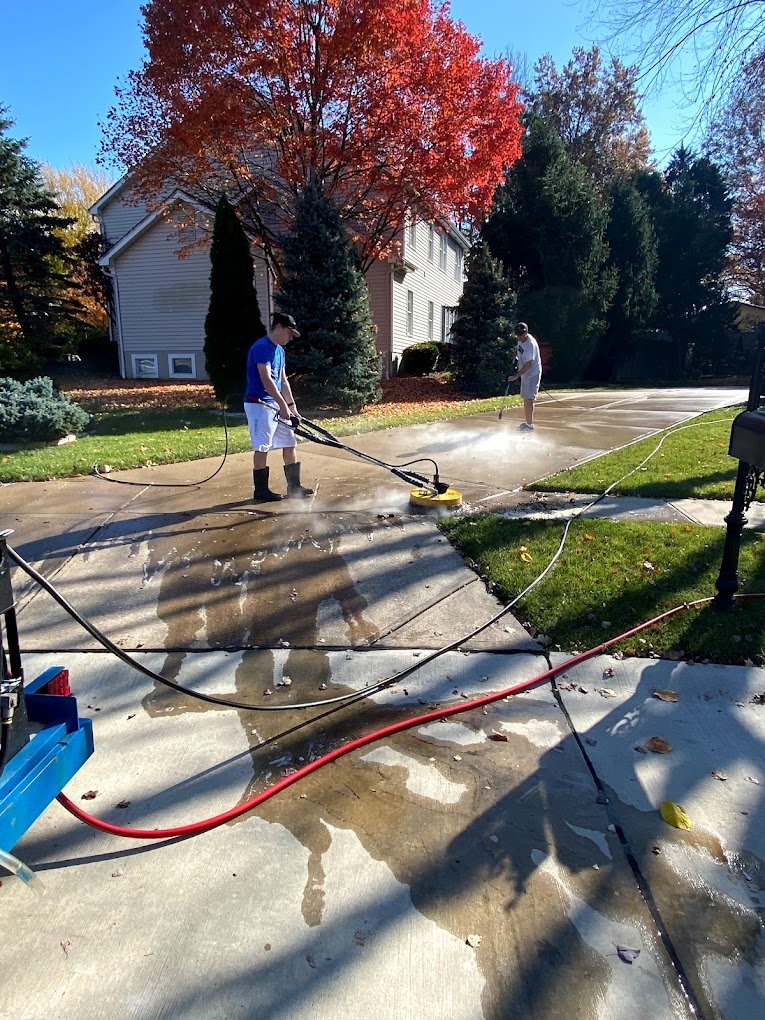
Work methodically across the driveway, keeping the cleaning equipment moving at a consistent pace. Overlap each pass slightly to reduce streaking and uneven cleaning.
Avoid lingering in one spot, especially when using a concentrated spray. Pay attention to edges, corners, and areas near the garage or sidewalk, where dirt may accumulate.
If you’re using a surface cleaner, follow the manufacturer’s instructions for operating speed and distance from the concrete.
Step 5: Rinse Thoroughly
Once the driveway has been cleaned, rinse away loosened dirt and cleaning residue. Direct runoff away from landscaping, storm drains where prohibited, and areas where it could create a slipping hazard.
Inspect the driveway as it dries. Some stains may remain and require additional treatment rather than more pressure.
Common Driveway Power Washing Mistakes to Avoid
A few simple precautions can help prevent damage:
- Using too much pressure: This can etch concrete and create permanent marks.
- Holding the nozzle too close: Concentrated spray can damage the surface.
- Ignoring stains before washing: Oil and rust may need specialized treatment.
- Cleaning unevenly: Inconsistent passes can leave stripes or patches.
- Skipping safety precautions: High-pressure water can cause serious injuries, and flying debris can damage nearby property.
Keep people and pets away from the work area, wear protective equipment, and follow the pressure washer manufacturer’s safety instructions.
When Should You Hire a Professional?
DIY driveway cleaning may work well for light dirt and routine maintenance. However, large driveways, heavy staining, extensive algae growth, or delicate and deteriorating concrete may benefit from professional attention.
Professional equipment and surface-cleaning techniques can help achieve a more consistent finish while reducing the risk of damage from improper pressure or application.
At Power Washing Pros STL, we take the time to assess the surface and choose an appropriate cleaning approach for your driveway.
Give Your Driveway a Fresh Start
A clean driveway can make a noticeable difference in your home’s curb appeal. With the right equipment and technique, routine cleaning helps remove everyday buildup and keeps concrete looking its best.
Not interested in spending your weekend behind a pressure washer? Let Power Washing Pros STL handle the dirty work.
Contact us today to request a quote for professional driveway cleaning and give your home’s exterior a fresh look.
Power Washing Pros STL is here to keep your property looking its best.
Ready to refresh your property’s exterior? Contact Power Washing Pros STL to discuss your commercial exterior cleaning needs and request a quote.